

Oakville · Virtual in Ontario & select provinces
Therapy for Eating Disorders
When food takes up way more space in your life than you want it to
- Free 15-minute consultation
- Receipts for extended health benefits
- In person in Oakville, serving Burlington & Milton, or virtual in Ontario & select provinces





4 therapists, one teamOakville & online in Ontario & select provinces
Not Sure Who to See?
Tell us a little about what’s going on and we’ll suggest the therapist who fits.
We’ll match you →You think about what you’re going to eat. What you already ate. Whether you ate “too much.” Whether you should eat less tomorrow. What your body looks like. What everyone else’s body looks like. Whether people are judging yours. What you’re allowed to eat. What you need to do to make up for eating. And somehow, something that should be an ordinary part of being human has become exhausting.
Maybe everyone around you thinks you’re doing fine. Maybe you’ve even convinced yourself that things aren’t “bad enough” to count. Or maybe you’re watching someone you love disappear further into rules, fear, guilt, secrecy or obsession around food and you have absolutely no idea what to say anymore. We provide eating disorder therapy in Oakville and online across Ontario and select provinces and territories for teens and adults struggling with eating disorders, disordered eating, body image, binge eating, restriction, purging, food anxiety and difficult relationships with food and their bodies.
You don’t have to reach a certain weight. You don’t have to have a diagnosis. And you don’t have to wait until things get worse. If food and your body are taking over your life, that’s enough reason to ask for help.
What Is an Eating Disorder?
Eating disorders are serious mental health conditions that affect a person’s relationship with food, eating, exercise, body image and often their sense of self. But they’re rarely just about food. For some people, an eating disorder becomes a way of coping with anxiety, difficult emotions, trauma, perfectionism, uncertainty, low self-esteem or feeling out of control.
For others, it begins with seemingly harmless attempts to “eat healthier,” change their body, improve athletic performance, or follow a diet. Over time, the rules become stricter. The thoughts get louder. And your world starts getting smaller. Eating disorders can affect people of all body sizes, genders, ages, backgrounds and identities.
You cannot tell whether someone has an eating disorder simply by looking at them. Someone can be struggling significantly while appearing completely “healthy” to everyone around them.
What Can an Eating Disorder or Disordered Eating Look Like?
Eating disorders don’t all look the same.
You may notice:
- Constantly thinking about food
- Feeling anxious around meals
- Feeling guilty or ashamed after eating
- Having rigid rules about what, when, or how you can eat
- Labeling foods as “good,” “bad,” “clean,” or “unhealthy”
- Avoiding certain foods or entire food groups
- Skipping meals
- Frequently eating less than your body needs
- Feeling out of control around food
- Episodes of binge eating
- Purging or feeling urges to compensate after eating
- Exercising because you feel guilty about food
- Feeling distressed when you can’t exercise
- Frequently checking your body
- Avoiding mirrors or photographs
- Comparing your body to other people’s
- Weighing yourself frequently
- Feeling like your weight or appearance determines your worth
- Avoiding restaurants or social events involving food
- Eating differently around other people than you do alone
- Becoming increasingly secretive around food
- Difficulty concentrating because you’re thinking about food or your body
- Irritability, anxiety, or distress around meals
- Feeling terrified of weight or body changes
- Feeling like you’re never “sick enough” to deserve help
Sometimes the eating disorder voice can become so familiar that it’s difficult to separate what you actually want from what the disorder wants. Therapy can help you start untangling the two.
Why Do Eating Disorders Develop?
There is no single cause of an eating disorder. Eating disorders can develop through a complex combination of biological, psychological, social, cultural, relational and environmental factors.
These may include:
- Genetics and family history
- Anxiety
- Depression
- OCD or obsessive-compulsive traits
- ADHD or neurodivergence
- Perfectionism
- Low self-esteem
- Trauma
- Difficulty regulating emotions
- Major life transitions
- Bullying
- Weight stigma
- Dieting
- Cultural pressure around appearance
- Athletic or performance environments
- Family or relationship stress
- Experiences of feeling out of control
Sometimes people can identify exactly when their relationship with food began to change. Other times, it happens gradually. What started as one small food rule turns into five. Then ten. Until eventually it feels like food has rules for everything. Understanding how your eating disorder developed can be helpful, but recovery doesn’t require finding one perfect explanation for why it happened.
Ready When You Are. Let’s Talk.
A free 15-minute consultation is the easiest first step. Book online in a minute, or give us a call.
Different Types of Eating Disorders
Eating disorders can take several forms, and people’s experiences don’t always fit perfectly into one category.
Anorexia Nervosa
Anorexia nervosa involves restriction of food intake alongside an intense fear of weight gain or behaviours that interfere with weight restoration, as well as disturbances in how body weight or shape is experienced or evaluated. It’s important to understand that eating disorders cannot be identified simply by looking at someone’s body.
Serious restrictive eating and eating-disorder thoughts deserve attention regardless of appearance.
Bulimia Nervosa
Bulimia nervosa involves recurring episodes of binge eating followed by behaviours intended to compensate for eating, alongside significant concerns related to body shape or weight. Bulimia can be incredibly isolating because people may experience intense shame and work hard to hide what they’re going through. You don’t need to hide it here.
Binge-Eating Disorder
Binge-eating disorder involves recurring episodes of eating accompanied by a sense of losing control and significant distress. People struggling with binge eating often carry enormous amounts of shame.
You may repeatedly promise yourself:
“Tomorrow I’ll have more control.” Then restrict or create stricter rules. Eventually the cycle happens again. Treatment isn’t about giving you more rules or teaching you to have more willpower. It’s about understanding and changing the cycle.

ARFID
Avoidant/Restrictive Food Intake Disorder (ARFID) involves restricted eating that isn’t primarily driven by concerns about weight or body shape. Food avoidance may relate to sensory characteristics, fear of negative consequences such as choking or vomiting, or very low interest in eating. ARFID can significantly affect nutrition, health, social experiences and everyday life.
OSFED & Other Disordered Eating
Not everyone struggling with an eating disorder fits neatly into one diagnostic category. Other Specified Feeding or Eating Disorder (OSFED) includes clinically significant eating-disorder symptoms that don’t meet the full criteria for another specific eating disorder. And some people experience disordered eating without having a formal diagnosis at all.
Your struggles don’t become valid only after they fit perfectly into a diagnostic box.
“But I’m Not Sick Enough”
This is one of the most common things people struggling with eating disorders tell themselves. Maybe you know someone who seems “worse.” Maybe your behaviours don’t happen every day. Maybe your weight hasn’t changed significantly. Maybe you still go to school or work. Maybe nobody knows you’re struggling.
So you tell yourself:
“It’s not that serious.” “Other people actually have eating disorders.” “I can stop whenever I want.” “I don’t deserve treatment yet.” You don’t need to prove you’re struggling. And you don’t need to become more unwell before you’re allowed to recover. Early support matters.
Eating Disorders & Body Image
For many people, eating-disorder recovery involves more than changing eating behaviours. Your relationship with your body matters too. You may have spent years believing that being thinner, smaller, fitter or somehow different would finally make you feel okay. Maybe you’ve postponed things until your body changes. You’ll wear that outfit later. Take photos later. Go swimming later. Start dating later. Feel confident later.
Live fully later. Therapy can help you explore where those beliefs came from, understand how body checking and comparison keep them going, and begin developing a relationship with your body that isn’t built entirely around appearance. The goal doesn’t have to be looking in the mirror every morning and thinking you’re amazing.
Sometimes recovery begins with something quieter:
Your body taking up less space in your thoughts so you can take up more space in your life.
Eating Disorders, Perfectionism & Control
Eating disorders often overlap with perfectionism. Maybe you’re someone who likes doing things properly. Not adequately. Not “good enough.” Properly. You hold yourself to incredibly high standards at school, work, in relationships and with your appearance. Food can become another place where those standards take over. Following the rule feels good. Breaking it feels like failure.
And when other parts of life feel uncertain or uncontrollable, controlling food may temporarily create a sense of safety. The problem is that eventually, what felt like control can begin controlling you. Therapy can help you develop flexibility without asking you to suddenly abandon every coping strategy you’ve relied on.

How Can Eating Disorder Therapy Help?
Eating disorder therapy isn’t about taking away your coping strategies overnight and leaving you with nothing. Recovery is collaborative.
Depending on your needs, therapy may help you:
- Understand your eating-disorder patterns and triggers
- Reduce shame around food and eating
- Challenge rigid food rules
- Understand binge-restrict cycles
- Cope with urges to engage in eating-disorder behaviours
- Develop emotional regulation skills
- Improve body image
- Reduce body checking and comparison
- Explore perfectionism
- Develop more flexible thinking
- Work through anxiety around food
- Build self-esteem outside of appearance
- Understand the role control plays in your eating disorder
- Explore identity outside of the eating disorder
- Navigate relationships and social situations
- Develop self-compassion
- Process underlying trauma or difficult experiences when appropriate
- Work toward a life that isn’t organized around food and body concerns
Recovery isn’t about becoming perfect at eating. That would just be perfectionism wearing a different outfit. It’s about freedom, flexibility, connection and getting more of your life back.
Eating Disorder Treatment Is Often a Team Effort
Eating disorders can affect both mental and physical health, which means psychotherapy may be one part of treatment rather than the entire treatment plan. Depending on your situation and the severity of your symptoms, your care team may also include a physician, nurse practitioner, registered dietitian, psychiatrist, dedicated eating-disorder program or other healthcare professionals.
With your consent, your therapist may collaborate with other members of your treatment team when appropriate. If your needs are beyond what can safely be supported in outpatient psychotherapy, we’ll talk openly with you about needing a higher or more intensive level of care. That’s not failing therapy. It’s making sure you receive the level of support your body and mind need.
Our Approach to Eating Disorder Therapy
There isn’t one version of eating-disorder recovery that works for everyone. Our therapists draw from evidence-informed and client-centred approaches that may include Cognitive Behavioural Therapy (CBT), Acceptance and Commitment Therapy (ACT), Dialectical Behaviour Therapy (DBT), narrative therapy, psychodynamic approaches, and somatic approaches.
Treatment will depend on your age, symptoms, diagnosis, physical health, goals and the other supports involved in your care. We may work on practical strategies for interrupting eating-disorder patterns while also exploring what’s underneath them. Because sometimes you need help getting through tonight’s dinner. And sometimes we need to understand why controlling food became so important in the first place.
There can be room for both.
Therapy That Feels Human
Eating disorders thrive on secrecy and shame, which can make talking about what’s happening feel incredibly vulnerable.
You might wonder:
- What if they judge how I eat?
- What if they make me give up every coping tool I have?
- What if they think I’m not “sick enough”?
- What if I’m not ready to change?
- What if I say this out loud and can’t take it back?
That’s not how we want therapy to feel. We want you to feel like you’re working with someone. You can tell us you’re scared of recovery. You can tell us part of you doesn’t want to give up the eating disorder. You can tell us you had a difficult week. You can laugh. You can cry. You can be frustrated.
You don’t have to pretend you’re more ready for change than you actually feel. Ambivalence is something we can talk about. We’ll figure it out together.
Eating Disorder Therapy in Oakville, Burlington, Milton and Online
We offer in-person eating disorder therapy at our Oakville offices, a short drive from Burlington and Milton. Our therapy offices are located in a residential home in Oakville. All sessions are by appointment only.
We also offer online eating disorder therapy across Ontario & select provinces. When it is appropriate, virtual sessions can work alongside medical, nutritional or other eating-disorder care you’re receiving in your community.
Your therapist
Therapists Who Work With Eating Disorders & Body Image
Book a free 15-minute consultation with any of us, or let us suggest who fits. Meet the whole team →

Katarina
Registered Psychotherapist (Qualifying)
Sees: Teens, adults, families and first responders & healthcare workers
Cost & insurance
What Sessions Cost
Fees, reduced-fee spots and insurance receipts are on our Prices & FAQ page.
- We don’t direct bill, but we can provide receipts for insurance reimbursement.
Questions
Frequently Asked Questions About Eating Disorder Therapy
Can’t find your answer? Call (289) 201-1951 or email hello@heartofoakpsychotherapy.com.
Do I need an eating disorder diagnosis to start therapy?
No. You may have a diagnosed eating disorder, suspect you have one, or simply know that your relationship with food and your body is making your life harder. You don’t need to know exactly what to call it before reaching out.
Do I have to be underweight to have an eating disorder?
No. Eating disorders affect people across the body-size spectrum. You cannot determine whether someone has an eating disorder, or how much they’re struggling, based on their appearance alone.
What if I don’t feel ready to recover?
You can still come to therapy. It’s common to have mixed feelings about recovery. Part of you may desperately want things to change while another part is terrified of what changing would mean. You don’t need to pretend that ambivalence isn’t there. We can talk about it.
Can you help with binge eating?
Yes. Therapy can help you understand patterns and triggers associated with binge eating, including restriction, emotional distress, shame, rigid food rules and other factors that may be contributing to the cycle. The goal isn’t to respond to binge eating with even stricter rules. It’s to understand what’s keeping the cycle going.
Can you help with body image even if I don’t have an eating disorder?
Yes. You don’t need an eating-disorder diagnosis to work on body image, body dissatisfaction, chronic dieting, comparison, food guilt or your relationship with your appearance.
You can read more in our guide, Body Image and Diet Culture: When It Might Help to Talk to Someone.
Do I need a dietitian too?
Some people benefit from working with a registered dietitian who has specific experience treating eating disorders. Whether that’s appropriate will depend on your individual needs. Eating-disorder treatment may also require medical monitoring because eating disorders can have serious physical effects. Your therapist can discuss the importance of additional professional support when appropriate.
Can parents be involved in a teen’s eating disorder treatment?
Depending on the young person’s age, needs, treatment plan and circumstances, parents or caregivers can play an important role in supporting recovery. We’ll discuss involvement, confidentiality, and treatment recommendations with families so everyone understands their role.
Free 15-minute consultation
Not Sure Who to See? We’ll Match You.
Finding the right fit matters more than finding the perfect words. Answer two quick questions and book a free consultation; we’ll point you to the therapist who suits what you’re looking for.
You Are More Than What You Ate Today
Your life deserves to be bigger than food rules. Bigger than the number on a scale. Bigger than checking your reflection. Bigger than planning what you’ll eat tomorrow because you’re ashamed of what you ate today. Imagine going out for dinner and actually listening to the conversation. Going on vacation without spending weeks worrying about the food.
Seeing a photograph of yourself without letting it ruin the entire day. Having enough mental space to think about your relationships, interests, goals and future. Eating without needing to earn it. Moving your body because you want to, not because you’re trying to undo something. And eventually realizing you went an entire afternoon without thinking about your body at all.
Recovery doesn’t mean you’ll never have another difficult thought. It means those thoughts don’t have to run your life.
Not sure which therapist is right for you?
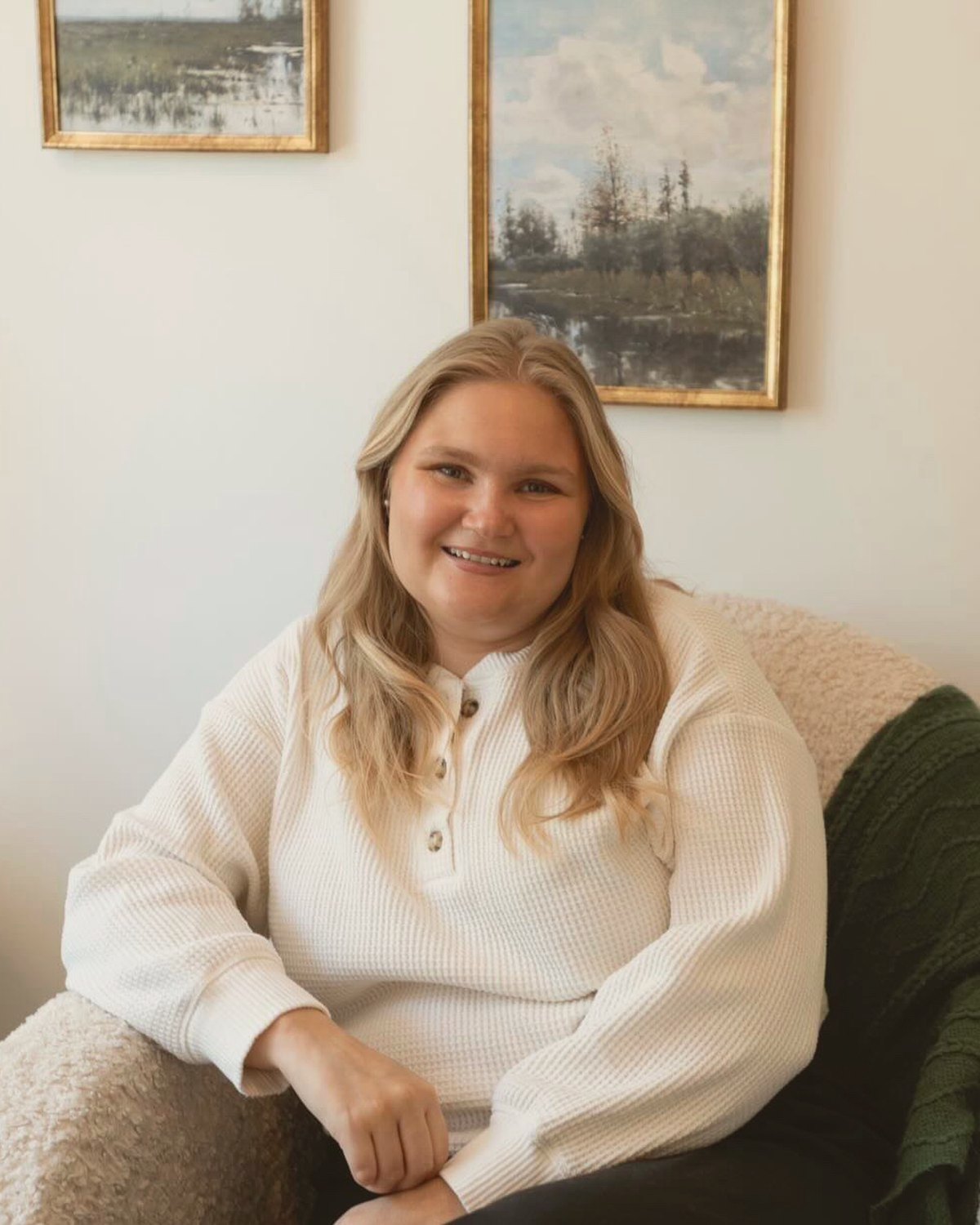
You don’t need to figure that out by yourself. Take our matching quiz or book a free 15-minute consultation with Katarina Jurriaans. She’ll learn a little about what you’re experiencing, what kind of support you’re looking for, and any other professionals involved in your care, then help match you with a therapist based on areas of focus, approach, personality and availability.
Book your free consultation. Your life deserves to take up more space than your eating disorder does.
Other ways we can help
Something Else on Your Mind? We Can Help With That Too.
Many people come in for one thing and find it’s connected to another. Explore the other areas our therapists work with.
Not sure it fits a box?
Most people aren’t. Book a free 15-minute consultation and we’ll help you sort out where to start.
Help me choose a therapist →Virtual therapySecure video sessions in Ontario & select provinces›AnxietyWorry, panic, racing thoughts›DepressionLow mood, numbness, no energy›Trauma & PTSDAfter one hard event, or years of them›Preteens & teensSchool, friendships, big feelings›Grief, loss & pet lossIncluding the loss of a pet›OCDIntrusive thoughts, doubt, compulsions›ADHDFocus, overwhelm, follow-through›Men’s therapyStress, anger, pressure to cope alone›Stress & life transitionsBurnout, change, new chapters›Relationships & datingPatterns, dating, attachment›LGBTQIA+ affirming careBe fully yourself in the room›Couples therapyConflict, distance, reconnecting›Family therapyParents, kids and the space between›First responders & healthcare workersShift work, hard calls, carrying it home›Self-esteem & confidenceThe inner critic, people-pleasing, comparison›Not sure? We’ll match youTell us what’s going on›