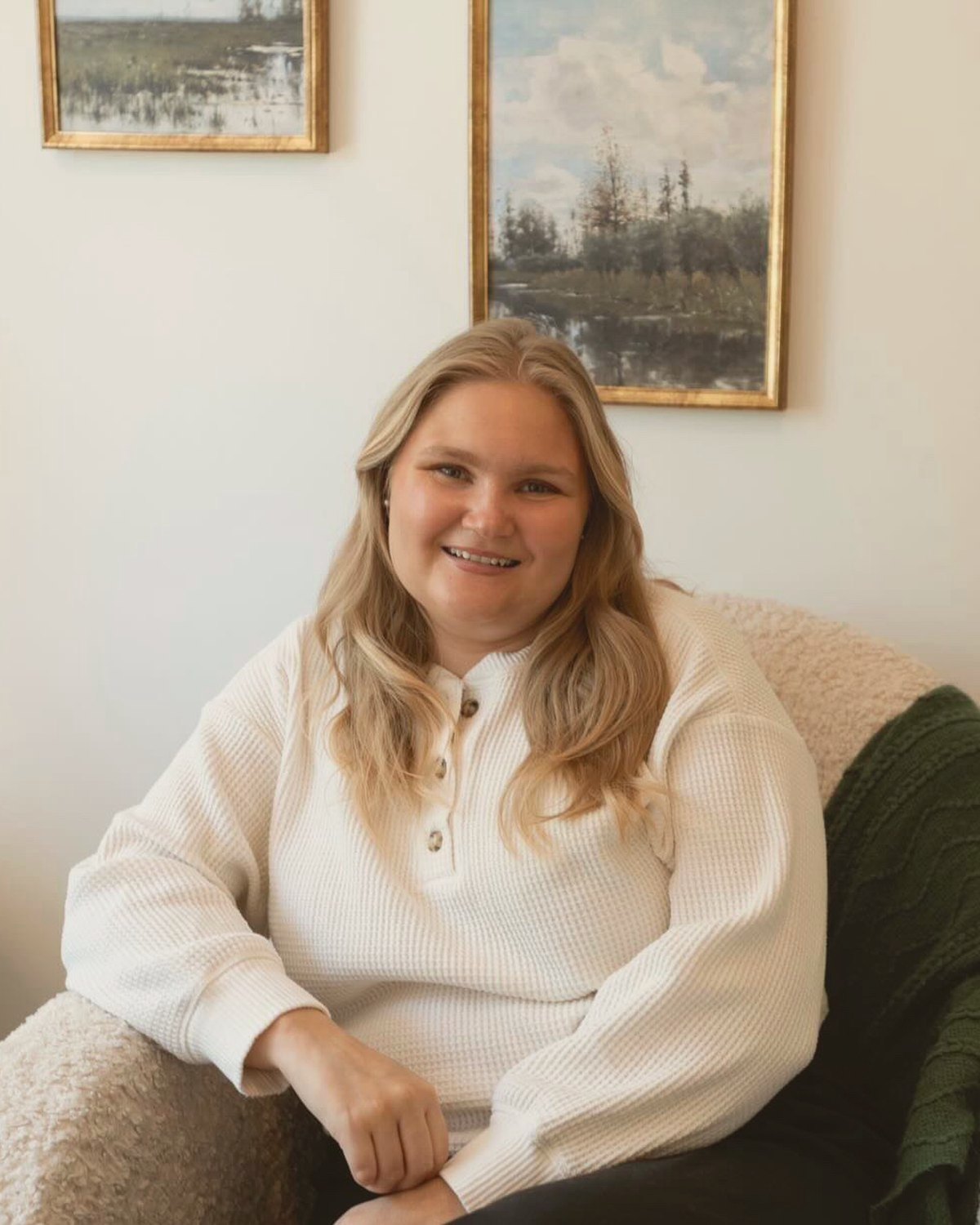
Mairin
Registered Psychotherapist (Qualifying)
Sees: Preteens, teens, adults, and first responders & healthcare workers

Something happened, and part of you is still there.





Tell us a little about what’s going on and we’ll suggest the therapist who fits.
We’ll match you →Maybe it was one moment. A car accident. An assault. A hospital stay that didn't go the way it should have. A call at work you can't stop replaying. Or maybe it wasn't one moment at all. Maybe it was years of growing up in a home that never felt safe, or a relationship that slowly wore you down.
You might be getting through your days just fine on the outside. Going to work. Showing up for people. But inside, your body is still braced for something. You jump at small sounds. You avoid certain places, people or conversations. You don't sleep the way you used to. Or you feel strangely numb, like you're watching your life from a distance.
And maybe part of you keeps saying:
“It wasn't that bad. Other people have it worse. I should be over this by now.”
What you're feeling makes sense. Trauma isn't about how “bad” something looks from the outside. It's about what it did to you, and what your mind and body have been doing ever since to try to keep you safe.
We provide trauma therapy in Oakville and online across Ontario and select provinces and territories for teens and adults living with the effects of difficult or frightening experiences, whether that's a single event, years of hard experiences, or something you've never quite had words for.
You don't have to have it all figured out to reach out. And you don't have to keep carrying it alone.
Trauma is the lasting impact of an experience that overwhelmed your ability to cope at the time. It's less about the event itself and more about how it landed in you: how frightened, helpless, alone or trapped you felt, and whether you had support afterward.
Two people can go through the same thing and come out of it very differently. That isn't a sign that one of them is weaker. It reflects everything else going on in their lives, their history, and the support around them.
Post-traumatic stress disorder (PTSD) is one way trauma can show up. It can develop after experiencing or witnessing something frightening or dangerous, or after repeated exposure to distressing events, which is common in some jobs. PTSD usually involves experiences like these that stick around and get in the way of daily life:
You don't need a diagnosis to start therapy. Many people live with some of these effects without ever being diagnosed with PTSD, and they still deserve support.
Trauma can come from many kinds of experiences. Here are a few we often hear about.
One event that changed how safe the world feels: a car accident, an assault, a fire or natural disaster, a sudden loss, or witnessing violence. Life may have felt fairly steady before, and then one moment shifted everything.
Repeated or ongoing experiences, often in relationships where you should have been safe. This can include emotional, physical or sexual abuse, neglect, growing up around addiction, violence or unpredictability, or a long emotionally harmful relationship.
Complex trauma often shows up quietly: trouble trusting people, a harsh inner critic, people-pleasing, feeling “too much” or “not enough,” or finding it hard to know what you actually feel.
A frightening diagnosis, an emergency surgery, an ICU stay, a difficult birth, a long illness, or feeling powerless or dismissed in medical settings. Medical trauma can make appointments, hospitals or even certain body sensations feel overwhelming.
Some jobs mean regularly seeing things most people never see. Paramedics, police officers, firefighters, dispatchers, nurses, physicians, personal support workers and other healthcare workers can be affected by one critical incident or by years of them. Trauma at work can also come from workplace violence, harassment or a serious accident. You can read more on our first responders & healthcare workers page.
Tell us a little about what’s going on and we’ll suggest the therapist who fits.
Trauma doesn't always look like it does in the movies. Sometimes it's loud. Often it's quiet.
You might notice:
Some people notice these things right after something happens. For others, they show up months or years later, sometimes when life slows down, or when something new stirs up something old.
Trauma therapy isn't about forcing you to relive the worst moments of your life. It's about helping you feel safer in your mind and body, at a pace that feels manageable, so the past has less of a hold on your present.
You stay in control of what we talk about and when. We'll start by getting to know you, what you're dealing with now, and what helps you feel steady. Some people want to talk about what happened in detail. Others don't, at least not yet. Both are okay.
Depending on what fits you, our therapists draw from approaches such as:
We'll talk about what each approach involves and decide together. You never have to do anything in session that doesn't feel right for you.
Your first session is mostly about getting to know each other. We'll ask about what brings you in, what's going on in your life now, and what you'd like to be different. You don't have to share the details of what happened before you're ready.
Early sessions often focus on feeling steadier: understanding your reactions, learning ways to calm your body, and building tools you can use between sessions. When it feels right, and only if you want to, we can begin working with the memories, beliefs and feelings connected to what happened.
Sessions are 50 or 75 minutes, in person at our Oakville office or online by secure video. Many people come weekly or every other week at first. We'll check in regularly about how it's going and adjust as we go.

Book a free 15-minute consultation with any of us, or let us suggest who fits. Meet the whole team →
Individual therapy
Can’t find your answer? Call (289) 201-1951 or email hello@heartofoakpsychotherapy.com.
No. You decide what you share and when. Many people start by focusing on how they're feeling now and building ways to feel steadier. Your therapist won't push you into details before you're ready.
There's no threshold you have to meet. If something is still affecting you, it's worth talking about. Comparing your pain to other people's often keeps people from getting support they deserve.
No. You don't need a diagnosis or a referral to book with us. Many people we see wouldn't describe themselves as having PTSD at all. They just know something from the past is still showing up in their present.
Yes. It's common for the effects of trauma to show up long after the event, sometimes during a big life change, a new relationship, becoming a parent, or when something reminds you of what happened.
Yes. We offer online trauma therapy by secure video anywhere in Ontario, Alberta, Saskatchewan, Manitoba, Newfoundland and Labrador, Yukon, the Northwest Territories and Nunavut, as well as in-person sessions at our Oakville office. Some people find it easier to talk about hard things from their own space.
If you are in crisis or thinking about suicide, call or text 9-8-8 (Suicide Crisis Helpline) any time, or call 911 or go to your nearest emergency department if you are in immediate danger. Therapy is not an emergency service, but we're here for ongoing support once you're safe.
Finding the right fit matters more than finding the perfect words. Answer two quick questions and book a free consultation; we’ll point you to the therapist who suits what you’re looking for.
Who works with what, at a glance.
| Couples | Michaela, Megan |
| Preteens | Mairin, Michaela |
| Teens | Mairin, Michaela, Megan (16+), Katarina |
| Families & parenting | Michaela, Megan, Katarina |
| OCD & intrusive thoughts | Mairin, Megan (ERP: Mairin) |
| Eating disorders & body image | Megan, Katarina |
| Trauma & PTSD | Mairin, Megan, Katarina |
| ADHD & neurodivergence | Mairin, Michaela, Megan |
| Men’s mental health | Mairin (a particular focus), Michaela, Megan, Katarina |
| First responders & healthcare workers | Mairin, Megan, Katarina |
| Anxiety, stress & self-esteem | All four of us |
Not on the list? Ask us in your free consultation.
You've been coping with a lot, maybe for a long time. The ways you learned to protect yourself made sense. You're allowed to want more than just getting through the day.
Imagine sleeping more easily. Feeling more at home in your body. Thinking about the past without it taking over your present. Therapy can't change what happened, but it can help you change your relationship with it.
Not sure which therapist is right for you?
Submit our Intake Form or book a free 15-minute matching call with Katarina Jurriaans. She'll learn a little about what you're going through and what kind of therapist you think you'd connect with, then help match you based on approach, personality, and availability.
Book your free consultation when you're ready. We'll go at your pace.
Many people come in for one thing and find it’s connected to another. Explore the other areas our therapists work with.
Most people aren’t. Book a free 15-minute consultation and we’ll help you sort out where to start.
Book a free 15-minute matching call →